
leaf gall mosquito Learn more about leaf gall mosquito
-
Control of jujube gall midge, a pest of jujube trees

Jujube gall midge (Contariniasp.) (1) alias and taxonomic status jujube bud maggot, curly leaf maggot, jujube maggot, belonging to Diptera, gall mosquito family. (2) the insect is distributed in all jujube areas in China, and the damage is the most serious in Shandong, Shanxi, Henan, Hebei and Shaanxi.
2020-11-08 Species jujube tree pest jujube gall midge control -
Lycium barbarum red gall midge and its control
Lycium barbarum red gall midge belongs to the gall mosquito family. The larvae are harmful to the ovary in the seedlings, forming abnormal buds and can not blossom. Lycium barbarum red gall midge has about 6 generations a year, overwintering as mature larvae in the soil, pupating in spring the following year, adults appearing in buds in mid-April and peak in May, laying eggs at the top of young buds. The larvae ate the ovary and the injured buds were deformed. Fall off because it can't blossom. In late September, the mature larvae were buried in the soil to overwinter. The method of prevention and control is to spray 50% 1605 EC 1000 times in the middle of April.
2019-01-15 -
What are the damage characteristics and living habits of jujube gall midge
Jujube gall mosquitoes are commonly known as curly leaf maggots, jujube maggots, which harm the young leaves of jujube trees with larvae, making the injured leaves curl vertically to the leaves. The curly leaves were purplish red in the early stage and brownish green in the later stage. The injured leaves gradually withered and scorched and fell off. Jujube gall midge produces 5-6 generations every year and overwinters as larvae in the shallow soil under the tree. The larvae began to roll leaves in late April, and the damage reached its peak in early May. The first generation of pupae was in early June and emerged as adults in early June. A large number of larvae occurred in Beijing from May to June, and the damage was the most serious. The larvae matured in about 10 days. Late August
2019-01-16 -
Control of leaf gall midge caused by insect pests of mango
This insect is a frequent and important pest and is distributed in Guangdong, Guangxi, Hainan, Yunnan, Fujian and other producing areas. The insect is seriously damaged shoot stage leaves, each leaf may have several or more than a dozen galls, which has a great impact on the quality of new shoots, and the damaged leaves leave a large number of perforations.
2020-11-08 Species mango pest leaf gall mosquito control this insect in Guangdong -
What does red willow use to spread its seeds?
Salix mandshurica is a good soil and water conservation tree species with straight and flexible branches and good wear resistance, which can be used for weaving. So how does the red willow spread its seeds? First, what does red-skinned willow rely on to spread its seeds? red-skinned willow spreads its seeds by the wind. Red willow has strong toughness and can
2020-11-08 Red willow shit what spread seed red yes good -
Technical points of integrated control of diseases and insect pests of Shatian pomelo
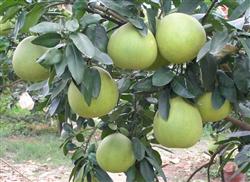
It is understood that since the 1980s, large-scale Shatian pomelo planting bases have been established in various parts of Meizhou, and the economic benefits have been increasing. Many farmers in the practice of planting Shatian pomelo for many years, the cultivation techniques have been greatly improved, but due to the large area, a wide variety of diseases and insect pests, the new occurrence of diseases and insect pests.
2018-07-31 -
How do pests harm flowers? Main damage modes of flower pests

In the last article, we introduced the common pests in the process of potted soil flower culture. We all know that pests do great harm to flowers, seriously threatening the reproduction, growth, flowering, fruiting and ornamental value of flowers.
2018-10-15 -
Usage of chlorpyrifos

Usage of chlorpyrifos
2018-08-09 -
Pest control of litchi and longan in autumn and winter
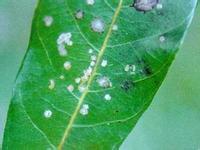
First, the species and control of insect pests in autumn shoot. Autumn shoots are the fruiting branches of next year, if eaten by pests, it will seriously affect the formation of flower buds next year. Autumn shoot pests are mainly a variety of leaf-eating inchworms and leaf rollers. Among them, gall mites (felt disease) and longan horncheek wood lice are the most harmful from September to November every year.
2018-09-15 -
The causes of yellow rose leaves, diseases and insect pests are all murderers.
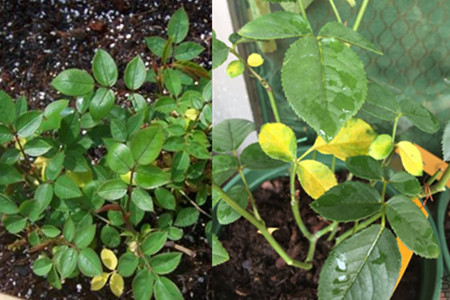
Rose is a very common flower and plant, its flowers are numerous and colorful, and it is very popular with people, but many people who raise rose flowers have encountered yellowing of flowers and leaves, so what are the specific reasons?
2018-12-06 -
Management technology of pollution-free pear mature orchard
February to March-budding and flowering period 1. Applying budding fertilizer: before budding in the middle and late February, 1000 kg of decomposed farm organic fertilizer and quick-acting multi-element compound fertilizer mainly composed of nitrogen, phosphorus and potassium were applied per mu to improve the quality of pear trees. The application amount of nitrogen, phosphorus and potassium accounted for 35%, 30% and 15% of the annual application amount respectively. In addition, 1.5% borax was added to the total amount to improve the quality of flowers. 2. Irrigation: timely irrigation of water before and after flowering to promote germination, flowering neat. 3. Fruit and flower protection: (
2019-01-16 -
What pesticides are commonly used in Feizixiao litchi?
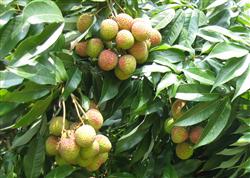
What pesticides are commonly used in Feizixiao litchi? Which pesticides can be hit by which insect pests? Feizixiao litchi commonly used pesticides are: insecticide spray insecticidal pesticides trichlorfon broad-spectrum, high efficiency and low toxicity organophosphorus pesticides. It has strong stomach toxicity and contact killing effect, which is the most common and effective way to control litchi bug.
2018-09-09 -
Control of diseases and insect pests of Taxus mairei
There are 7 kinds of diseases and insect pests of Taxus mairei cuttings in greenhouse during the whole growing period.
2018-10-21 -
Soil Control methods of Family Flower and Plant pests
Soil Control methods of Family Flower and Plant pests
2020-11-26 -
Management of Litchi in August and September
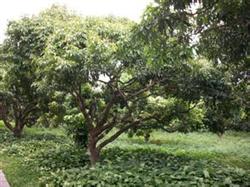
All the postharvest management work of litchi is centered on the purpose of cultivating healthy autumn shoots. As the fruiting mother shoot of litchi in the coming year, the shoot period and the stout degree (nutrient accumulation level) will directly affect the shoot control, flower promotion and flower formation. From the production survey situation, at present, the city's litchi trees have generally been smoked...
2018-09-15 -
What are the common diseases and insect pests of Anthurium andraeanum? Prevention and control techniques of common diseases and insect pests of Anthurium andraeanum

Recently, the editor found that many flower growers were consulting about the cultivation of Anthurium andraeanum in the background, summed it up, and found that the consultation on the prevention and control of diseases and insect pests of Anthurium andraeanum was the most. The following editor brings you the prevention and control techniques of common leaf and flower diseases and insect pests of Anthurium andraeanum. For reference
2018-10-13 -
Growth environment and cultivation techniques of kumquat fruit trees
The variety classification of kumquat is usually divided into ordinary kumquat and slippery kumquat. Let's take a look at the difference between these two kinds of kumquat. Kumquat, kumquat (including flame, gold, honey, embroidery, kumquat, golden bullet, golden jujube, etc.) belongs to Yun spice, is a spiny evergreen shrub, the tree is more than 1 meter high
2018-09-06 -
Key points of Management of Litchi Longan fruiting trees
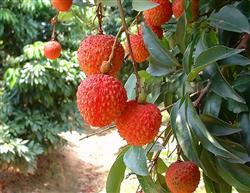
First, do a good job of postharvest management. 1. Timely harvest. When picking fruit, one fruit should be cut twice. First, cut the ear together with the base of the fruiting branch, or even the base of the branch below the fruiting branch, and then cut off the ear. The branches below the ear do not shrink much, depending on the growth of the mother branch, and the ones that grow well are shortened.
2018-09-15 -
Diseases and insect pests of edible fungi and their control methods
Bacterial spot disease 1, harmful symptoms the disease often occurs on the bacterial bag or bacterial bed, its surface is mucus, hyphae yellowing, the pathogen can produce toxins, so that the cover on the emergence of disease spots. The plaque is brown, round or oval, the periphery of the spot is dark and irregular, the center of the lid is gray-white when wet, there is milky mucus, and the central part is slightly sunken when the air is dry. The disease spot on the stalk is rhombic and oval in shape. Second, the disease conditions climate is uncomfortable, in case of high temperature, high humidity, the relative air humidity is more than 95%;
2019-01-16 -
Causes and countermeasures of dead mushroom
Too much reproduction algebra of mycelium aging dead mushroom, or too high production temperature, improper preservation and long storage period can lead to mycelium degeneration and senescence, decline of vitality, insufficient accumulation of nutrients in the body and atrophy and death of mushroom buds. Countermeasures: high-quality bacteria should be selected and contaminated bacteria should be eliminated in time; conditions suitable for mycelium growth and development should be created; indoor cleanliness, fresh air and high temperature culture should be strictly prevented; bacteria should be used as far as possible and should not be preserved for a long time. Continuous high temperature dead mushroom before mushroom emergence
2019-01-11